2025
Lamborghini
interaction
Performance HMI
CONTEXT
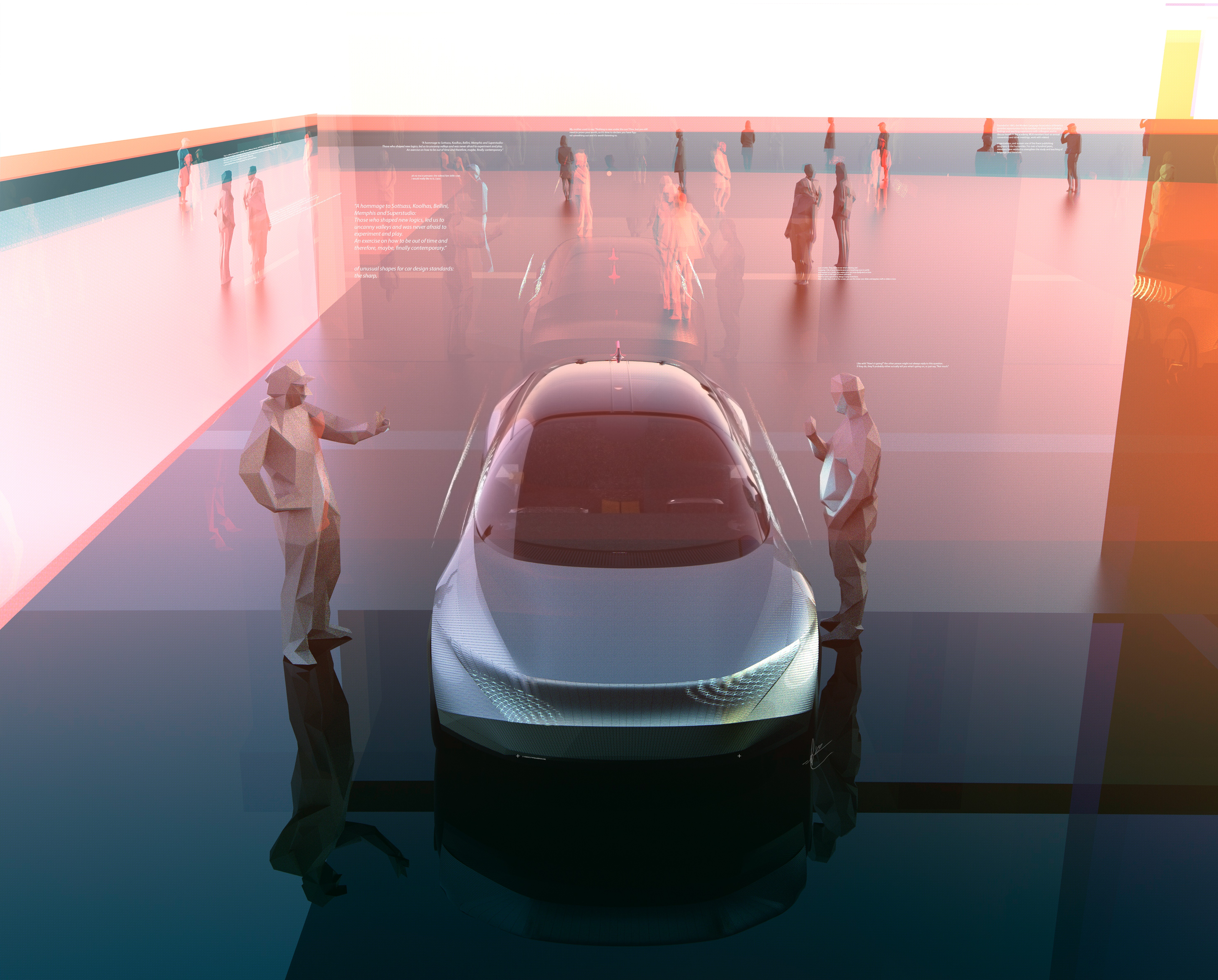
This project explored future interaction scenarios for Lamborghini across multiple vehicle typologies. The objective was to translate an early design vision into an immersive and testable system, enabling evaluation of functionality, interaction logic and ergonomics.
ROLE
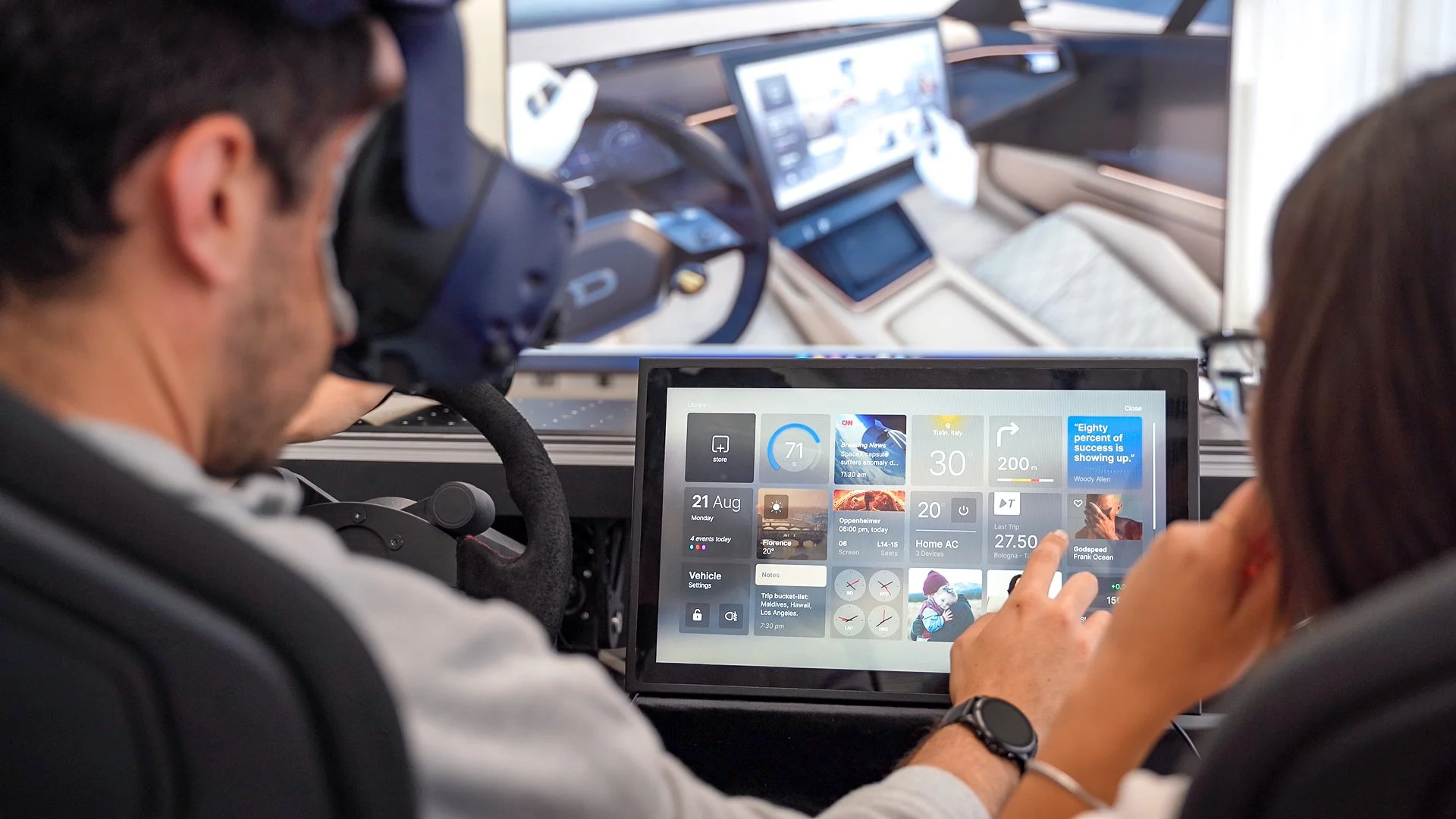
We designed and delivered a mixed reality prototyping platform, combining virtual simulation, UI development and hardware integration. This enabled cross-functional teams to interact with and evaluate the HMI as a coherent system rather than a conceptual proposal.
THE SHIFT
From concept visualization to system validation
HMI concepts are often difficult to evaluate beyond static representations. The challenge was to transform an abstract vision into a fully interactive experience, allowing teams to directly engage with behaviors, logic and interaction flows.

“Turning HMI concepts into a fully testable experience.”
APPROACH
SENSE
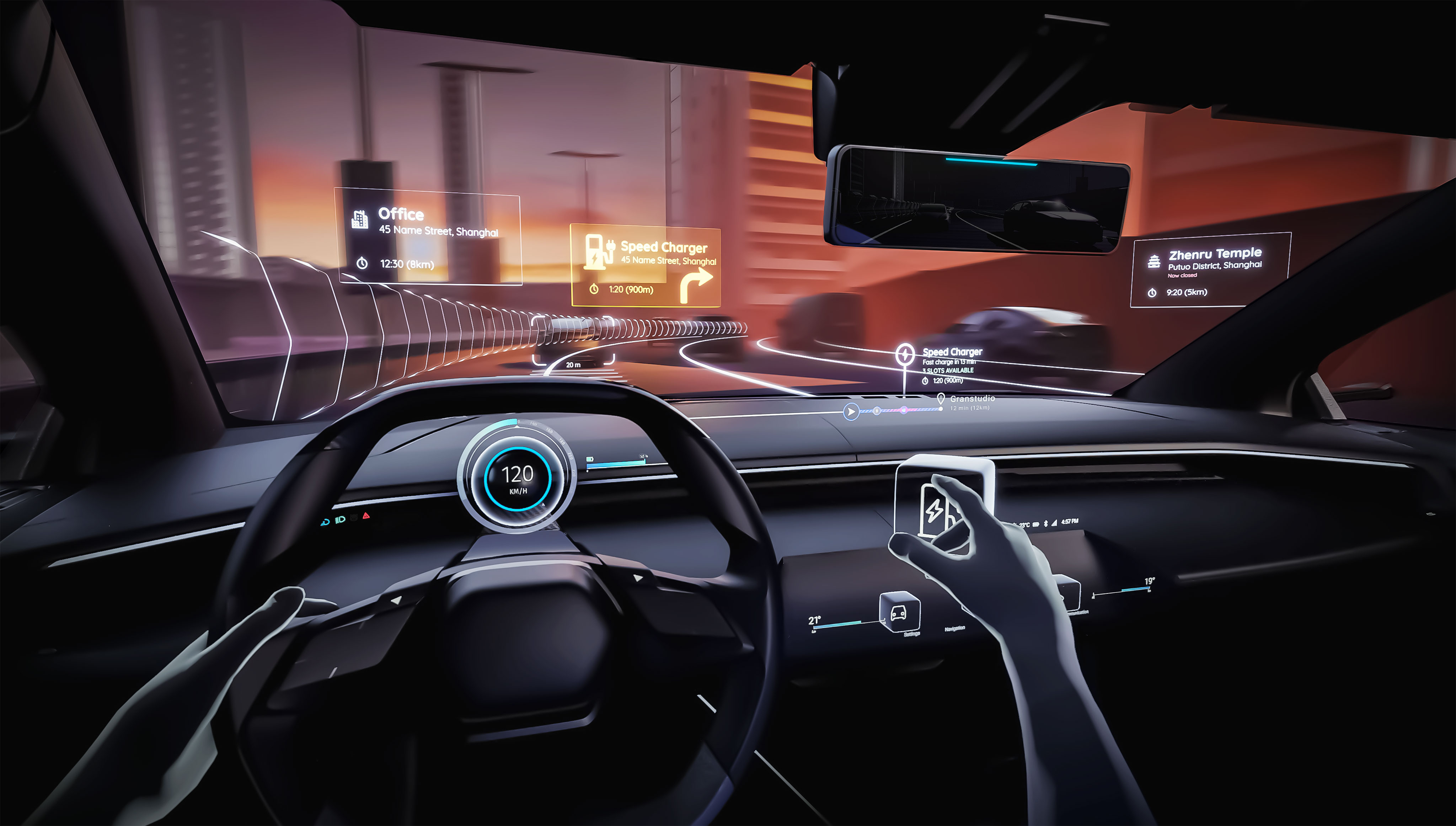
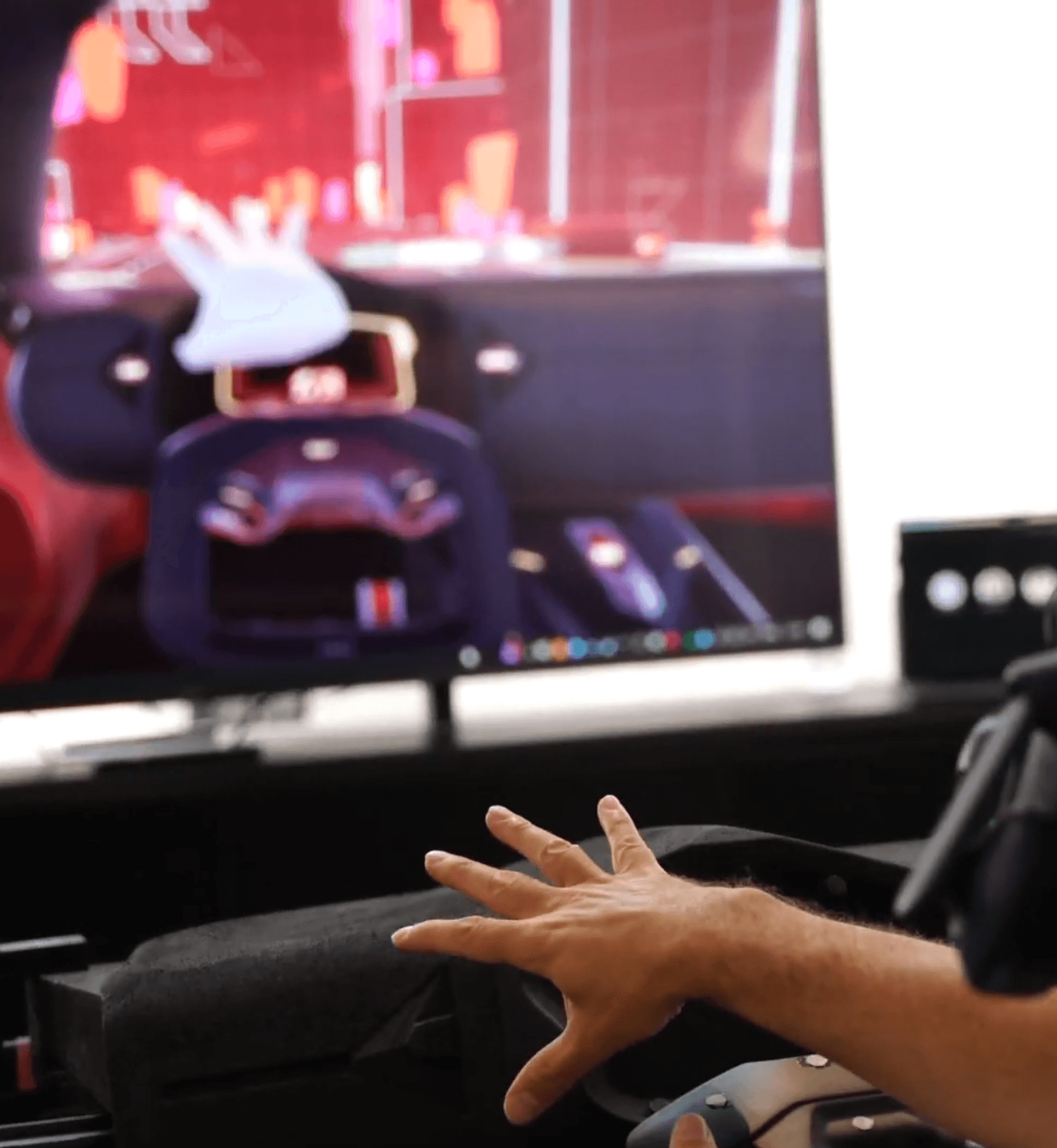
We developed dynamic simulation environments in Unreal Engine, enabling the HMI to be experienced across multiple driving scenarios such as city, rural and track. This allowed users to interact with core vehicle functions in context, supporting immediate feedback and a more grounded evaluation of usability, behavior and system coherence.
SHAPE
We translated design concepts into a fully interactive UI system using ProtoPie, defining advanced behaviors, transitions and connections between screens. This approach allowed the HMI to function as an integrated system, where multiple interfaces respond dynamically to user input and context, rather than remaining isolated visual prototypes.
MAKE
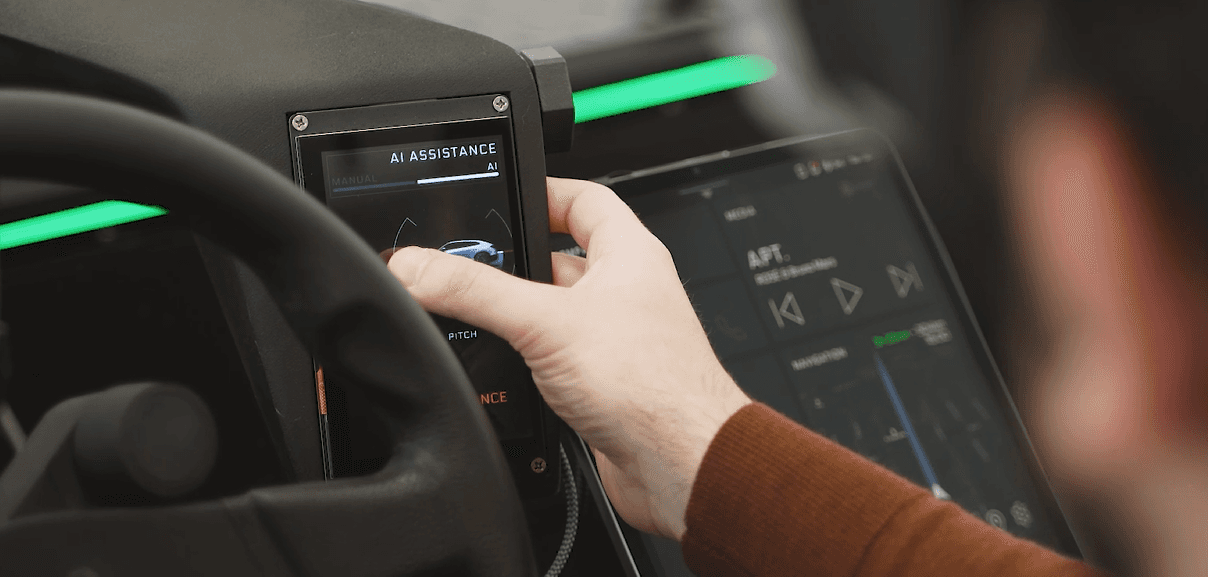
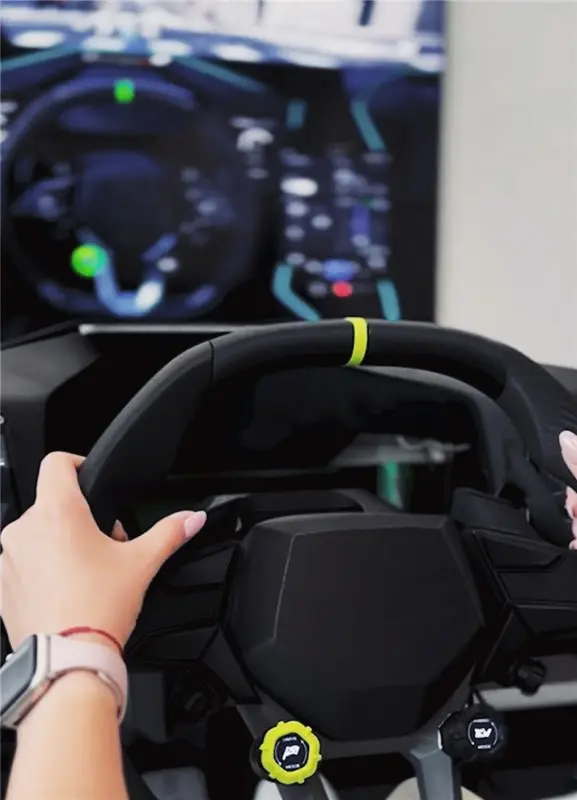
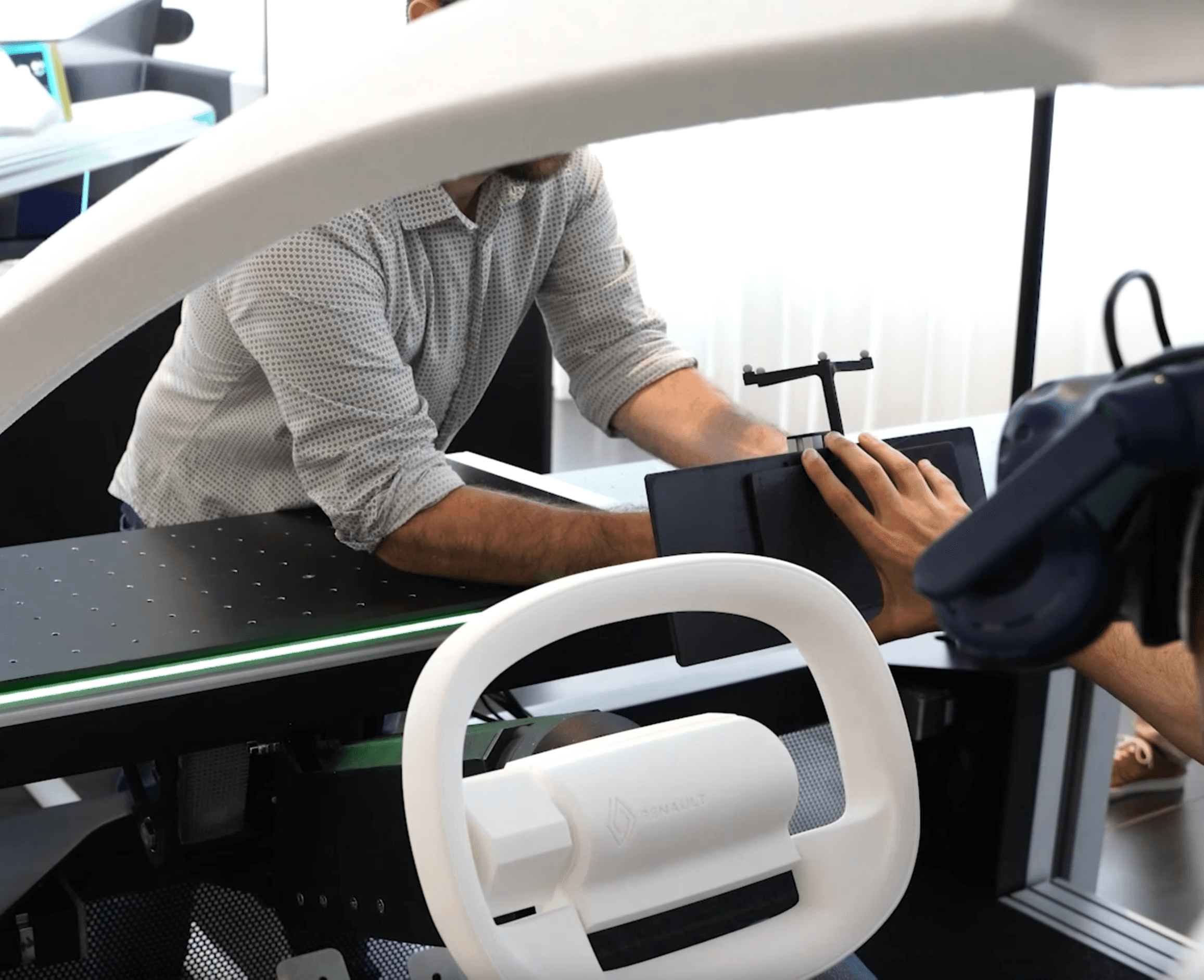
We built a synchronized physical-digital platform integrating a functional steering wheel with embedded inputs, interactive displays and tracked components. Hardware and software were connected through Arduino, ESP32 and Raspberry Pi, enabling real-time interaction and ensuring consistent communication between physical controls and the virtual environment.


“Bridging physical and digital layers to simulate real system behavior.”
OUTCOME


WHAT CHANGED
Making future HMI tangible
The project transformed how future HMI concepts are evaluated, shifting from static reviews to immersive, system-level validation. By enabling real interaction with complex behaviors, it improved alignment across teams and supported more confident and informed design decisions early in the process.